
ELECTRICAL TESTING BUSINESSES
Test and Tag Insurance for Appliance Testing Technicians
Your work takes you into client premises, places electrical equipment in your care and produces records that clients rely on. B Ok helps test and tag businesses review cover around that actual scope.
Business risks
A test report can carry risk after the site visit ends
Test and tag work is often completed across many sites, with different equipment, access arrangements and record requirements. An insurance proposal needs to describe the work you actually perform, including anything beyond inspection and testing.
For sole operators and growing test and tag firms seeking a broker review of liability, professional and equipment risks.
Work at client premises
Accidental injury or property damage allegations can arise while moving through workshops, offices, construction sites or other workplaces.
Reliance on test records
A client may allege financial loss after relying on an inspection result, report or recommendation. The wording for that professional exposure deserves a separate review.
Equipment on the road
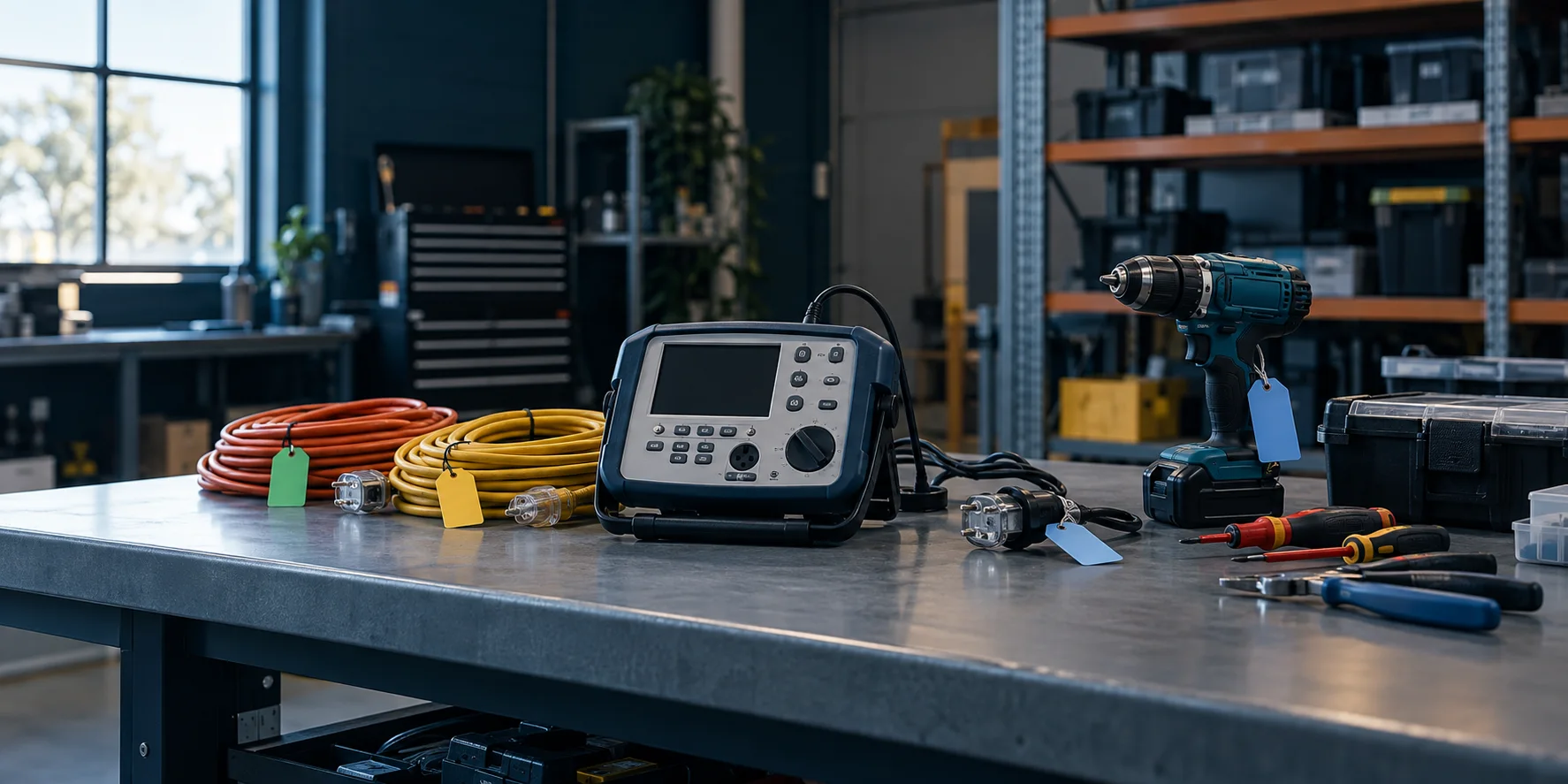
Portable appliance testers, leads, labels, laptops and tools may travel between jobs and need suitable limits and theft conditions.
Talk to an advisor
Request a test and tag insurance review
Tell us what you test, where you work and whether you provide reports, advice or other electrical services. A broker can then discuss the policy areas and details needed for a quote.
Cover structure
Cover to consider for a test and tag business
The right mix depends on your services, customers, sites, staff and contracts. These are common policy areas to compare, subject to insurer acceptance, limits and exclusions.
Public liability
Review protection for covered third-party injury or property damage claims connected to your business activities at a client site or your own premises.
Professional indemnity
Consider allegations that an error in testing, reporting or professional advice caused a client financial loss. Check the declared services, retroactive date and claims-made terms.
Tools and testing equipment
Assess cover for portable testers, calibration equipment, laptops, labels and tools while at your premises, in a vehicle and away from base.
Business and vehicle cover
Office contents, cyber response and commercial vehicle cover may matter as the operation grows. We review these alongside your main liability policies.
Licences and contracts
Rules that shape test and tag work in Queensland
Queensland workplaces must manage electrical risk, and testing plug-in equipment is how most of them do it. Your competence, standards and records all feed into your insurance.
Competent person
Testers need to be competent, for example by holding an electrical licence or completing in-service safety testing training such as UEERL0003.
Repairs need a licence
A restricted tester can inspect and test, but replacing a plug or cord needs a licensed electrician. Insurers treat repair work as a different occupation.
AS/NZS 3760 and 3012
Workplace testing follows AS/NZS 3760. Construction sites follow AS/NZS 3012, with portable tools usually tested every three months.
Records and calibration
Keep dated results, next due dates, the tester's name and your calibration certificate. Good records help defend a claim.
Summarised from the Electrical Safety Act 2002 and Electrical Safety Regulation 2013 (Qld) and the relevant Australian Standards. Check current requirements before you rely on them.
What it costs
What drives the cost of test and tag insurance
Test and tag cover usually prices well, because the work is low risk compared with general electrical contracting. These factors shape it.
Testing only or repairs too
Adding repairs, installation or RCD work changes the occupation and the premium.
Sites you visit
Mines, construction sites and hospitals carry more risk than offices.
Professional indemnity limit
A higher PI limit costs more but suits clients who rely on your reports.
Turnover and staff
More testers and more revenue mean more exposure.
We do not publish price lists because two testing businesses can pay very different premiums. Send us your details and we will come back with real quotes, not estimates.
Claim examples
How test and tag claims happen
Claims against testers usually come from a missed fault, damage on site or lost equipment.
Missed fault
A lead you passed fails a month later and a worker receives a shock. The employer alleges your test was wrong.
Damage during testing
You unplug a server to test it and the client's system goes down for a day.
Tester stolen
Thieves take your portable appliance tester and label printer from your car.
These are illustrative scenarios based on common claim types, not real client claims. Whether a policy pays depends on its wording, limits and exclusions.
Who it helps
Testing businesses this page is for
How we work
How B Ok reviews your insurance
Define the work
We ask where you operate, what equipment you test, which reports you issue and whether you also repair, install or perform other electrical work.
Review requirements and assets
We examine client contract limits, site access rules, subcontracting, testing equipment values and any current policies or claims history.
Compare available terms
We explain insurer quotations, limits, excesses and important exclusions so you can choose cover that reflects your disclosed operations.
Keep browsing
Related cover to review next
FAQs
Common questions about test and tag contractors
What insurance does an appliance test and tag technician need?
Most test and tag technicians need public liability for injury or damage on a client's site, and professional indemnity in case a tag or report you issue turns out wrong and a client suffers a loss. Many also insure their testing equipment and vehicle, and take personal accident or income protection cover because they work for themselves.
Does public liability cover a wrong test result?
Do not assume it does. Public liability and professional indemnity respond to different types of allegations. We review both wordings against the testing, reporting and advice your business provides.
Can insurance cover my portable appliance tester?
Portable testing equipment can be considered under tools or general property cover. Declare the replacement value, where it is used and how it is stored so the insurer can confirm the relevant terms.
What if I also repair or install electrical equipment?
Tell your broker before taking out or renewing cover. Repair, installation and other electrical work may change the occupation, insurer appetite and licensing requirements. The policy should reflect every service you perform.
Do I need insurance when clients require a certificate of currency?
Many clients ask for evidence of public liability or other cover before allowing work on site. We can review the contract limits and activity description, then help you obtain evidence for the cover actually arranged.
Can I get cover if I use subcontractors?
Possibly, but subcontracting needs to be disclosed. We review who performs the testing, contract responsibilities and the insurer requirements for subcontractor cover and records.
With B Ok, you'll be OK
Need this cover reviewed?
Tell us what your business does, what you already have in place and what contracts or assets need protecting. We'll help you compare suitable options.